Creativity and Imagination in Forest School

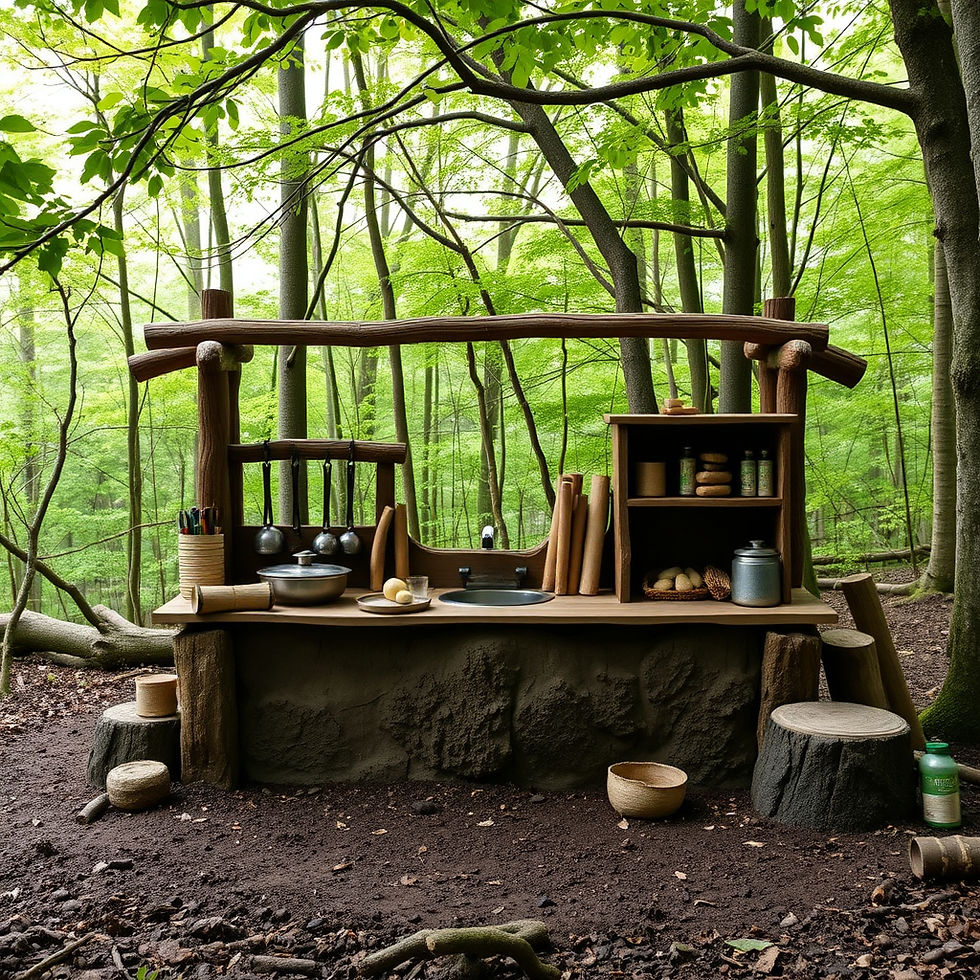
Creativity is an essential part of childhood development. It allows children to imagine new possibilities, experiment with ideas and approach problems in innovative ways. Creativity is not limited to art or craft activities — it also includes problem-solving, flexible thinking and curiosity about the world.
At Wildbound Forest School in Kent, the woodland environment provides a unique space where children can explore their creativity through open-ended play, natural materials and child-led learning.
Why Creativity Matters for Children
Creativity plays an important role in many areas of a child’s development. When children are encouraged to explore ideas and experiment freely, they develop skills such as:
problem-solving
resilience
independent thinking
curiosity and exploration
confidence in their own ideas
Creative thinking also supports academic development. Children who are used to exploring different solutions and experimenting with ideas often become more adaptable learners.
However, many children today spend much of their time in structured environments. From classrooms to organised activities, much of their day follows clear instructions and expected outcomes.
Forest School provides a valuable contrast to this structure.
Forest School: A Natural Environment for Creativity
One of the core principles of Forest School is that it is a long-term, child-led learning process that takes place in a natural environment.
This combination of time, freedom and natural surroundings creates ideal conditions for creativity to flourish.
Instead of being given fixed tasks with predetermined results, children are encouraged to explore their own ideas. A simple stick might become:
part of a den
a fishing rod
a wand
a bridge for imaginary creatures
a tool for digging or building
In woodland environments, possibilities are endless and constantly changing.
The Importance of “Loose Parts” in Creative Play
In the 1970s, educator Simon Nicholson introduced the Theory of Loose Parts, which suggests that environments rich in movable materials encourage creativity and discovery.
The more varied the materials available, the more opportunities children have to experiment and combine them in new ways.
Woodlands are naturally full of loose parts such as:
leaves
sticks
pine cones
acorns
moss
stones
feathers
These materials can become building blocks for dens, imaginative play, nature art and problem-solving challenges.
At Wildbound Forest School, children are encouraged to explore these materials freely, allowing their imagination to guide their creations.
Freedom to Explore and Experiment
Forest School sessions are led by trained practitioners, but the philosophy behind Forest School focuses on facilitating rather than directing learning.
This means children are given the autonomy to explore their own interests within a safe and supportive environment.
If a child becomes fascinated by insects, animal tracks or a particular plant, this curiosity can become the starting point for exploration and learning.
Playwork theorist Fraser Brown describes how many children grow up in highly structured environments where routines and rules shape their experiences. Forest School offers a contrast to this structure, allowing children to follow their curiosity and engage with nature in flexible and creative ways.
Curiosity and Creativity in the Outdoors
Research exploring children’s experiences in woodland learning environments has found that nature encourages curiosity, experimentation and creative thinking.
In the study “We’re Trying to Find Cool Things in the Forest – Exploring Children’s Curiosity and Creativity in the Outdoors”, researchers observed how children naturally experimented with materials and ideas when playing in woodland environments.
They found that the complexity and variety of natural environments invited exploration, and that curiosity often led directly to creative thinking.
Children constantly experimented with new ideas, materials and possibilities, creating a cycle where curiosity inspired creativity and creativity encouraged further curiosity.
Creativity Without Pressure
Another important element of creative development is intrinsic motivation — the desire to create and explore simply for the enjoyment of the activity itself.
Forest School encourages this by avoiding rewards or incentives for creative ideas. Instead, children are free to experiment, make mistakes, adapt their ideas and try again.
This freedom allows creativity to develop naturally and helps children build confidence in their own thinking.
Creativity at Wildbound Forest School
At Wildbound Forest School in Kent, creativity emerges naturally through woodland exploration and play.
Children might:
build imaginative woodland dens
create sculptures and nature art
invent games and stories
experiment with natural materials
design simple structures using sticks and rope
Through these experiences, children develop confidence, resilience and the ability to think creatively about the world around them.
A Woodland Environment That Inspires Creativity
Children are naturally curious and imaginative. When they are given the time, space and freedom to explore their ideas, creativity flourishes.
Forest School provides the perfect environment for this exploration. The woodland becomes a living classroom where curiosity leads to discovery, experimentation and creativity.
At Wildbound Forest School, children are encouraged to explore, imagine and create — developing skills that will support them throughout their lives.


Comments